
Everything You Thought You Knew About Digital Marketing Is a Lie
(Okay, maybe not everything. But a lot.)

This week, we’re breaking down:
✅ Marketing in 2015 vs. 2025 – What we thought would last forever (and what we never saw coming).
✅ The QR Code Comeback – How a once-dead tech became a must-have marketing tool (again).
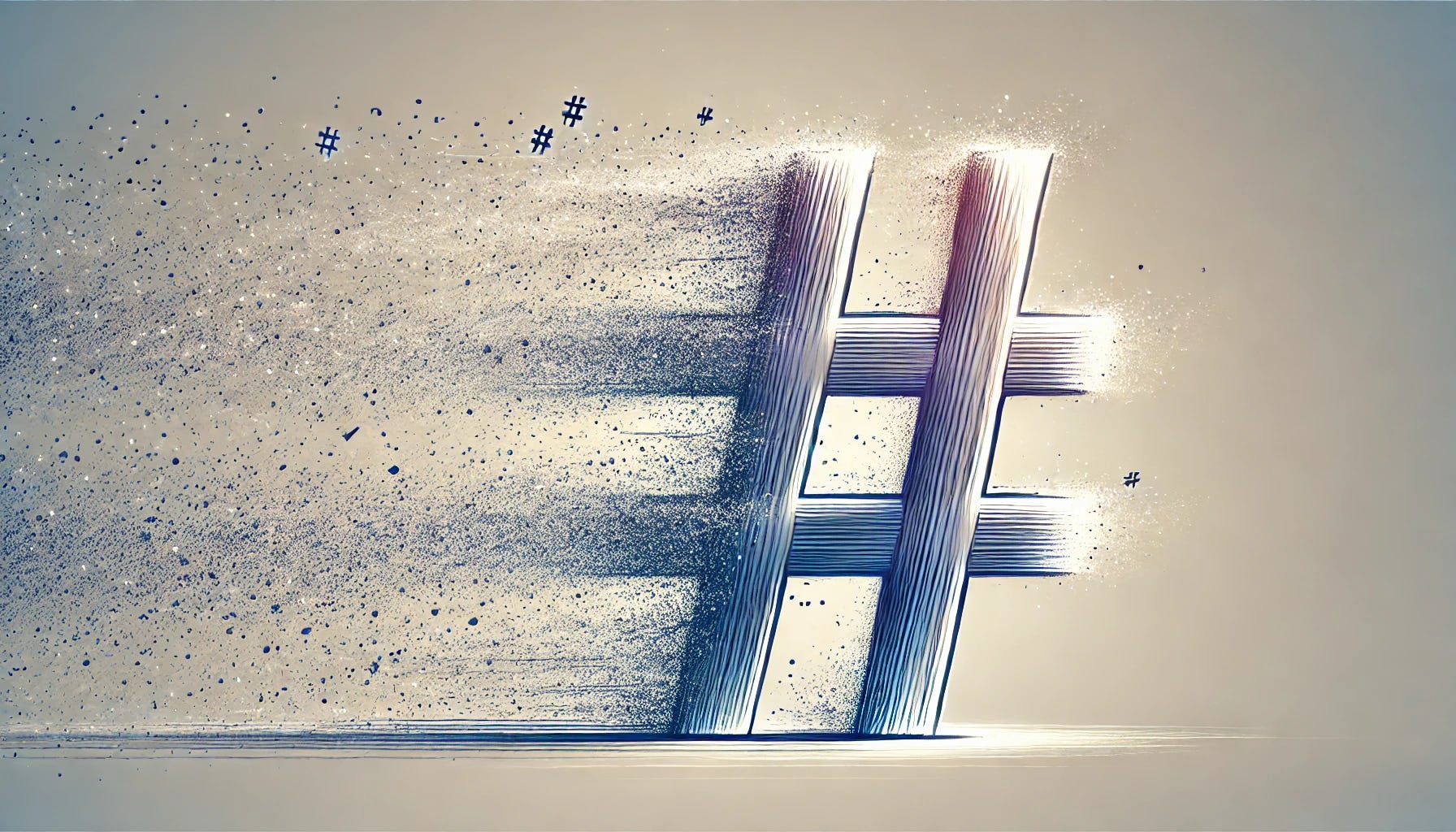
✅ Hashtags Are So Over. – The latest research on why they don’t work and what to do instead.

How We Got Here
Marketing trends die all the time.
Some deserve it (RIP Clubhouse), some never really go away (hello, email newsletters), and some pull a full zombie move and crawl back from the dead when you least expect it.
Case in point: One of our paid media experts (Hi, Bella!) recently witnessed something that shattered our worldview when she saw someone at the gym actually use their phone to scan a QR code… from a TV commercial.
Yeah, you heard us. A QR code on a linear TV ad… something that we would’ve confidently told you was a very ineffective and inefficient exercise. And yet, here was this guy, sweating on the treadmill, still pulling out his phone and scanning like it was second nature.
This moment of existential crisis made us think: What else in digital marketing have we confidently declared dead, only for it to return in some weird, unexpected way? And what have we all just accepted as best practices that might not actually hold up anymore?
So in this week’s issue of Side Effects May Vary, we’re breaking down some of the biggest plot twists in digital marketing over the past two decades.
QR Codes: From Punchline to Power Move
Remember when QR codes were supposed to be the future? We all plastered them on business cards, posters, even billboards, convinced people would totally stop what they were doing, pull out their phone, open a QR scanner app (because phone cameras didn’t auto-detect them yet), and engage.
Spoiler: They usually didn’t.
By 2015, QR codes were basically a marketing joke used ironically, if at all. Then came 2020, when the pandemic made us all touch-averse and desperate for contactless interactions. Suddenly, QR codes became the way to check restaurant menus, pay for things, and yes, even engage with ads.
And now, as our gym guy proved, they’ve gone full-circle, creeping back into traditional media where we really never expected to see them again.
Lesson learned: Nothing digital is ever truly dead—it might just be waiting for its moment to shine.
The Hashtag Hack
Ah, hashtags. Once the sacred key to virality, they were included in copy everywhere. Remember brands slapping #DoWhatYouCant or #ShareACoke on every ad, convinced that engagement would skyrocket?
And yes, we also remember when you put #Foodie on your sepia-filtered Instagram post.
For years, marketers operated under the assumption that adding a handful of hashtags was the key to unlocking reach and engagement. Sometimes the magic number was 30, sometimes it was 3-5.
But studies over the last few years show that hashtags now have basically no impact on views, reach or engagement on Instagram. Meta algorithms are pushing content based on user behavior (who you engage with, what you watch) rather than a bunch of #keywords in the caption.
That said, hashtags aren’t completely useless. They still have value for research and discovery. People use them to find niche communities (#BookTok, #HomeWorkout), follow event conversations (#MusicAwards), or categorize their own content.
But as a growth strategy? The days of slapping #marketingtips on your LinkedIn post and watching the organic reach roll in are long gone.
Lesson learned: Hashtags work best with a plan, not just because ‘everyone else is doing it.’
The Death (and Rebirth) of Organic Reach
Once upon a time, brands could post on Facebook and actually expect their followers to see it.
Wild, right?
Then came the Great Organic Reach Collapse of the 2010s. Facebook throttled brand visibility (pay up or get buried), Instagram followed suit, and TikTok—while generous at first—is now inching toward a similar fate.
Every time a new platform pops up (hello, Threads), brands rush in hoping for a fresh start. But eventually, the algorithm clamps down.
Meanwhile, some “dead” platforms (looking at you, email and SMS) are thriving because they don’t rely on an algorithm at all. The brands investing in owned channels—newsletters, texts, forum communities—are the ones that aren’t panicking every time Meta tweaks its algorithm.
Lesson learned: Own your audience, or risk losing it overnight.
So, What’s the Takeaway?
Digital trends aren’t always cyclical, but they are often chaotic.
Some things die for good (Google+), some come back when the time is right (QR codes), and some quietly stop working while everyone’s still using them (hashtags).
The only real constant? Change.
So if you see a QR code on a TV commercial, maybe… give it a scan. Just to mess with your worldview a little and show a marketer out there that they aren’t totally crazy (yet).
Inside The Parallel Path Group Chat:
🤖Parallel Path Launches SideCountry – Meet SideCountry, our new GenAI studio built to supercharge marketing creativity and execution. AI isn’t the future—it’s the now, and we’re making sure brands don’t get left behind.
💸 Pepsi Buys Poppi – The 2 Billion-Dollar Bet on Prebiotics – The soda giant just snatched up Poppi, proving functional beverages aren’t just a fad—they’re big business. But will Pepsi’s play keep Poppi’s cool factor, or will it lose its indie brand magic?
🏋️CrossFit Is Up for Sale (Again) – Once the king of hardcore fitness, CrossFit is now looking for a new owner amid declining performance. What went wrong, and what does this mean for the future of boutique fitness brands?
About Side Effects May Vary:
The fine print of health and wellness marketing—decoded. We cut through the noise, call out the B.S., and give you insights you won’t find anywhere else.
About Parallel Path:
Health and wellness marketing is flooded with sameness. At Parallel Path, we cut through it. Strategy that actually drives growth. Creative that actually gets noticed. Media that actually performs.
We move fast, think sharp, and get brands where they need to go. If that interests you, let’s talk!