
Live Longer, Pay Later
Wellness wants you to pay a monthly subscription.

This week, we’re breaking down:
✅ The rise of Longevity-as-a-Service
✅ Why biological age is becoming the new wellness KPI.
✅ Whether health brands should ride the biomarker wave—or rethink the obsession with optimization.
Once upon a time, wellness was just about feeling better. Now it’s about proving you’re feeling better.
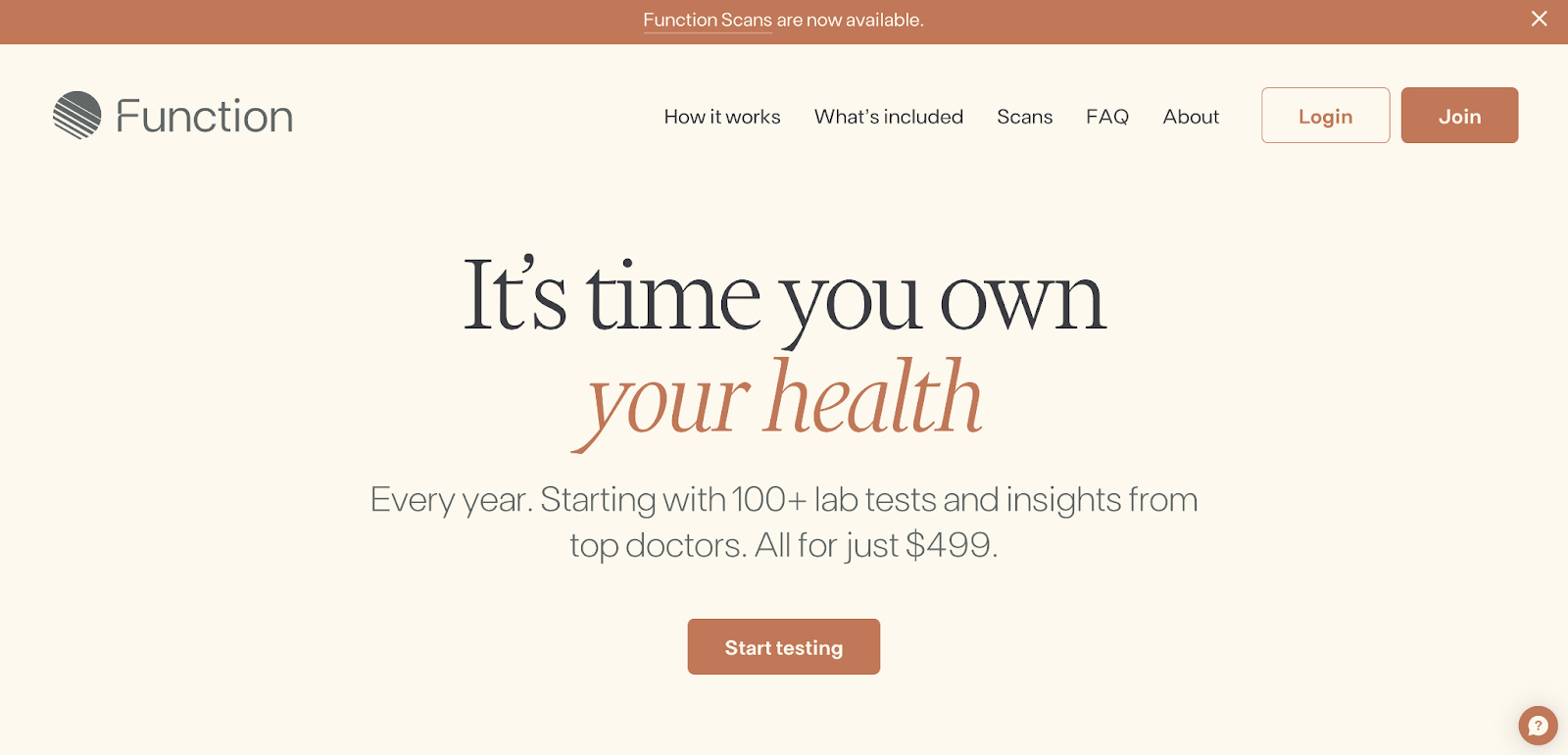
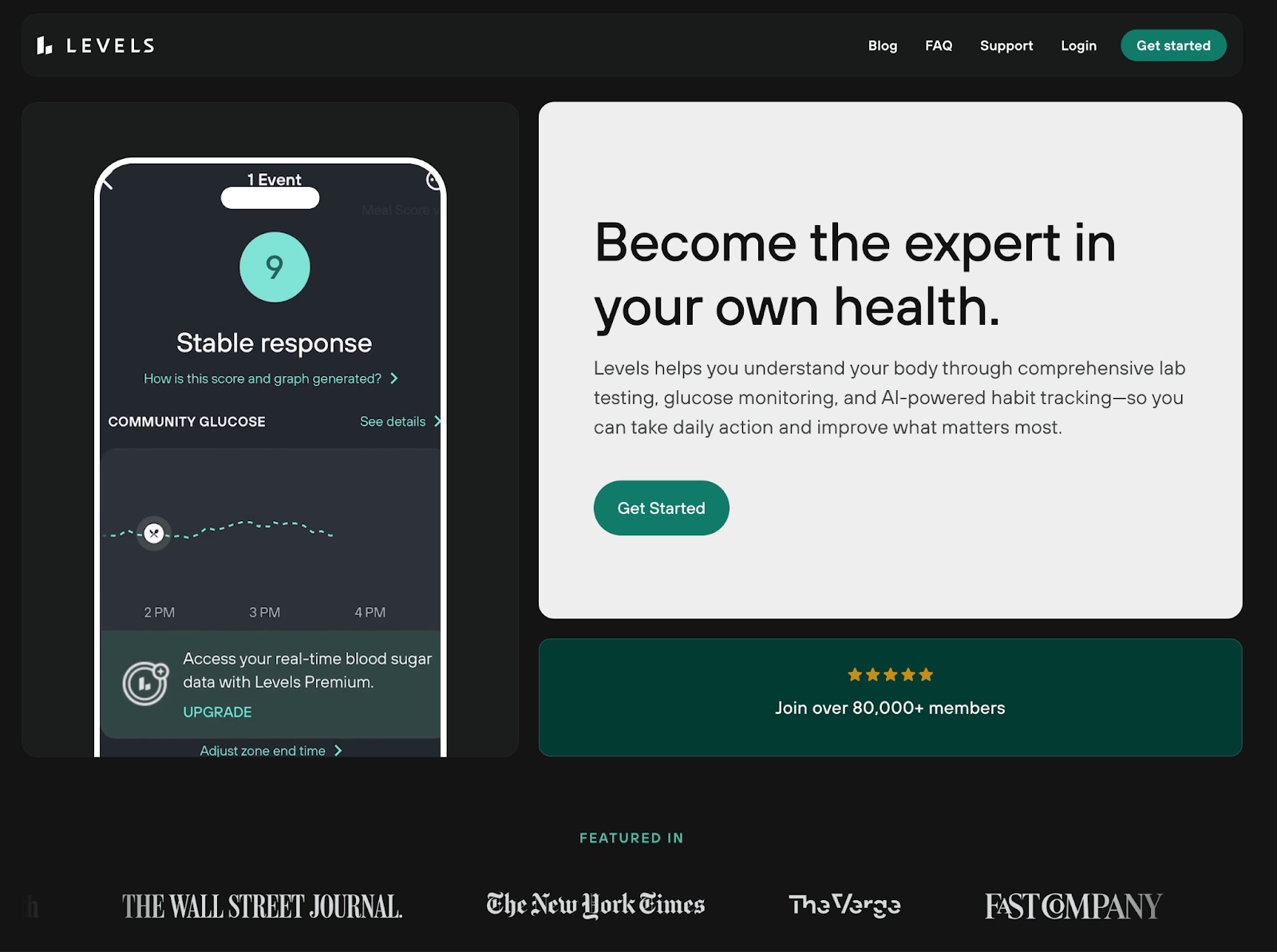
Longevity is no longer reserved for billionaires in cryogenic saunas or Peter Thiel’s blood fantasies. Startups like Function Health, Levels, and Humanity are turning life extension into a consumer service powered by personalized diagnostics, subscription-based biomarker tracking, and relentless data dashboards that tell you how close you are to a 90-year lifespan.
Welcome to Longevity-as-a-Service. Wellness, meet SaaS.
Test. Track. Live forever.
These companies are betting big on two trends:
Consumers want to know more about their bodies than ever before
Preventative health isn’t satisfying anyone fast enough
Function Health offers 100+ lab-tested biomarkers for $499 a year. Levels maps your metabolic health using continuous glucose monitors and costs $199 per year. Humanity claims its algorithm can calculate your actual “biological age” and coach you how to slow it down for a monthly fee.
This is not just diagnostics, it’s diagnostics with a dashboard.
According to a 2024 McKinsey report, roughly one-third of surveyed wearable users said they use their devices more often than they did last year, and more than 75 percent of all surveyed consumers indicated an openness to using a wearable in the future.
And the global longevity economy? Expected to top $610 billion by the end 2025, per Global Wellness Summit
But here’s the twist: These services don’t always lead to meaningful medical intervention. Often, you’re paying just to know more, and maybe, just maybe, feel in control.
Why now?
Three reasons longevity is trending in the mainstream:
Aging anxiety is rising: In an NIH Study in 2022, 61.2% of Gen Z respondents reported they had negative feelings about aging or age-related worry. Younger generations aren’t just afraid of death, they’re afraid of not living optimally.
Healthcare feels reactive: In a system where you often need to be sick to get attention, these brands promise proactive control. You don’t wait until you’re diabetic, you get your A1C monitored in real time.
AI + blood + biomarkers = $$$: As AI diagnostics mature, biomarkers are the next data frontier. For platforms, it’s not just about health, it’s user behavior, subscription stickiness, and LTV.
So what should wellness brands do?
There’s a tension here:
Is this the future of wellness or a symptom of its distortion?
If you're a health or wellness brand right now, you're watching a cultural shift where wellness is becoming more like wealth management. And you're asking: Do we play the game? Or offer a counterpoint?
Option 1: Lean in
For brands with credibility, authority, or clinical support, this is a land grab. The desire for hyper-personalized wellness is only growing. Bundling products with diagnostics (or partnering with platforms like Function or Levels) could build trust and retention, especially for aging consumers or tech-savvy Gen Zs.
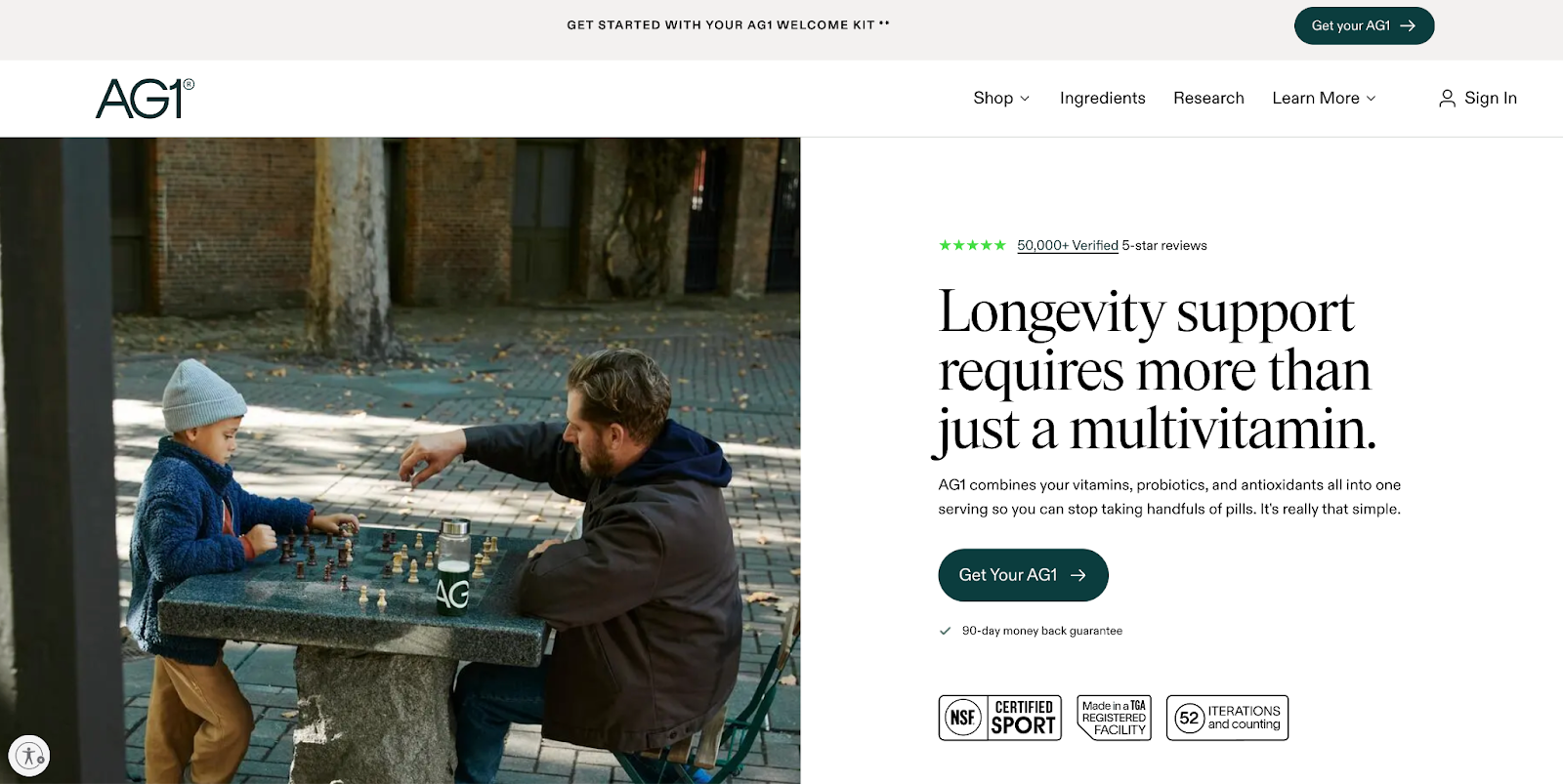
Even brands like Athletic Greens (AG1) are framing their products as helping to ‘fill in the gaps’ as you age over 50.
Option 2: Push back
For others, the right move might be resisting the pull toward constant measurement. Consumers are getting burnt out on self-surveillance. The idea of “biomarker fatigue” is real and so is the mental health toll of treating your body like a dashboard.
Some wellness brands may find more resonance in offering an antidote: human-first, low-anxiety health experiences that promote resilience, not obsession.
Where we land
We’re not anti-data or anti-tech. But we are wary of wellness that only sells you pre-determined answers.
We see this moment in wellness mirroring what happened with productivity.
Once something could be tracked, it had to be. And once you could optimize, you weren’t enough unless you did.
Now that mindset is creeping into our health and especially our longevity. What was once about living well is starting to feel like a full-time job.
One more dashboard. One more score. One more way to fall short.
That’s not just a UX problem. It’s a wellness contradiction. Because while the industry talks more than ever about mental well-being, it’s also creating a culture of pressure, self-surveillance, and perfectionism dressed up as empowerment.
The same tools that promise control can quietly fuel anxiety, especially for younger consumers already navigating burnout, body image pressures, and the endless pursuit of “doing better.”
For brands, the challenge is this:
Can you show up in this quantified world without adding to the noise?
Can you offer clarity without feeding comparison?
Can you help people live longer without making them feel like they’re failing every day they’re not optimizing?
Longevity is a worthy pursuit.
But if wellness becomes another performance metric, we risk losing the “well” part altogether.
Inside The Parallel Path Group Chat:
🔍 SEO is dead. Long live AEO –As AI-powered search engines take over, traditional SEO is losing ground. If you aren’t optimizing for answer engines, you’re basically handing over visibility to your competitors. The AI era is here — and it's rewriting the rules of discoverability.
🎧 Mindbody + ClassPass = Playlist –In a big rebrand move, Mindbody and ClassPass are now under one umbrella: Playlist. It's not just a name change — it's a signal that they’re building the infrastructure for a next-gen wellness empire, powered by AI, scale, and strategy. And with a $3B valuation, they’re not playing small.
💖 Loyalty isn’t dead — it’s irrationalp–According to a new Zeno Group study, 72% of shoppers would stay loyal to a brand even if it costs more, and 87% would support them even when it’s inconvenient. Turns out people don’t just buy with their wallets — they buy with their identity. Something to remember when you’re calculating CAC vs. LTV.
About Side Effects May Vary:
The fine print of health and wellness marketing—decoded. We cut through the noise, call out the B.S., and give you insights you won’t find anywhere else.
About Parallel Path:
Health and wellness marketing is flooded with sameness. At Parallel Path, we cut through it. Strategy that actually drives growth. Creative that actually gets noticed. Media that actually performs.
We move fast, think sharp, and get brands where they need to go. If that interests you, let’s talk!